




 public offer


8.1 Topic: “Physical Activity as the Foundation of a Healthy Lifestyle”
All exercises can be divided into aerobic and anaerobic. For physical activity among the general public, aerobic exercises are the most important, as they provide a good training effect without placing excessive strain on the body’s systems. Before starting training, you should see a doctor to identify possible contraindications; in addition, people over 30 should have a resting electrocardiogram (hereinafter, ECG), and people over 40 should have an exercise ECG.
The main physical qualities developed through training are endurance, strength, speed and flexibility. The intensity of training loads is measured by heart rate (hereinafter, HR) during exercise. The optimal training effect for healthy adults is achieved at a load level that matches Holman’s formula: HR = 180 − age. The HR measured within 10 seconds after the end of exercise should correspond to this formula.
The main effects of normalizing physical activity on the body:
- reduced risk of chronic non-communicable diseases, including cardiovascular diseases;
- lower blood pressure (hereinafter, BP) and lower HR (prevention of hypertension);
- improved ratio of low-density to high-density lipoproteins (prevention of atherosclerosis);
- lower serum glucose levels and increased glucose tolerance (prevention of type 2 diabetes):
- reduced loss of blood calcium (prevention of osteoporosis);
- increased fibrinolytic activity of plasma (prevention of thrombosis).
The main forms of health-promoting physical exercise:
- morning hygienic exercises;
- swimming;
- strength training;
- aerobics;
- recreational running and walking;
- sports games, cross-country skiing;
- Eastern health practices (yoga, qigong, tai chi);
- exercise on machines (cardio and weight machines, exercise bikes).
8.2 Topic: “Healthy Eating”
To raise public awareness of the basics of balanced nutrition and to develop healthy eating skills in order to change behavioral and dietary risk factors for non-communicable diseases.
Proper, balanced nutrition and maintaining energy balance are the foundation for preventing many non-communicable diseases.
The principles of balanced nutrition:
- balance between the energy received from food (calorie content of food) and the body’s energy expenditure;
- balance between proteins, fats, carbohydrates, vitamins, minerals and dietary fiber;
- following a meal schedule (regular meals and distribution of food throughout the day);
The daily diet should contain 80-90 g of protein, 100-105 g of fat and 360-400 g of carbohydrates, and its energy value should be 2750-2800 kcal. The optimal ratio of animal to plant protein in the human diet ranges from 60:40 to 50:50 (depending on the quality of the plant protein), averaging 55:45.
Reducing excess body weight and keeping it at a normal level is a rather difficult but quite achievable task. To control your body weight, you need to watch the amount and composition of your food and your physical activity. Maintaining a normal body weight depends on the balance between the calories taken in with food and the calories used up. Physical activity helps burn calories. Body weight should be reduced gradually, avoiding unusual diets, as they usually bring only temporary success. With preventive interventions, success in weight reduction can be achieved within a year.
Quetelet index. This is a reliable indicator of harmonious development used in many countries around the world (the body mass index), or Quetelet index. The Quetelet index is calculated using the following formula:
BMI = weight (kg) : {height (m)}2
The result is compared with the table below:
| Classification of health status by BMI | BMI | Health risk | What to do | |
|---|---|---|---|---|
| 18–25 years | over 25 years | |||
| Anorexia nervosa. Atypical anorexia. | Weight more than 15% below expected, BMI below 17.5 | High | Weight gain and treatment of anorexia are recommended. | |
| Underweight | Below 18.5 | None | ||
| Normal | 19.5–22.9 | 20.0–25.9 | ||
| Overweight | 23.0–27.4 | 26.0–27.9 | Increased | Weight loss is recommended |
| Obesity class I | 27.5–29.9 | 28.0–30.9 | Increased | Weight loss is recommended |
| Obesity class II | 30.0–34.9 | 31.0–35.9 | High | Weight loss is strongly recommended |
| Obesity class III | 35.0–39.9 | 36.0–40.9 | Very high | Weight loss is strongly recommended |
| Obesity class IV | 40.0 and above | 41.0 and above | Extremely high | Immediate weight loss is necessary |
For example: your age is 27, your height is 190 cm, your weight is 115 kg.
BMI = 115 : (1.9×1.9) = 115 : 3.61 = 31.85
A normal Quetelet index is 19-24 for women and 20-25 for men. Class I obesity is diagnosed when the Quetelet index is 26-30; class II when it is 30-40; class III when it is over 40. A Quetelet index below these values indicates underweight.
Since unhealthy eating behavior and habits in patients with obesity develop over decades, they need to be changed gradually, over a long period of time. Weight loss of 2-4 kg per month is generally considered safe for health. Patients with obesity cannot cope with these tasks on their own. The attending physician plays a major role in helping the patient. However, it is important that the patient takes an active role and strives to change their lifestyle. Shopping for food and cooking are important: you need to be able to choose healthy foods and put your doctor’s recommendations into practice when preparing meals. High-fat, high-calorie foods should be replaced with low-fat, low-calorie ones.
8.3 Topic: “Smoking Prevention”
Methods for identifying tobacco dependence:
determining the presence of this risk factor by asking (Do you smoke?);
determining the stage of smoking (How many years have you been smoking? How many cigarettes do you smoke per day on average?) The criterion for a regular smoker is smoking daily or occasionally;
determining the degree of pharmacological dependence (time of the first cigarette after waking up in the morning);
identifying the type of smoking using the Horn questionnaire to determine the reason for smoking.
Stages of smoking:
Stage I (occasional smoking): 5-10 years of smoking, 5 cigarettes per day on average. Mainly psychological dependence. No somatic changes, or mild autonomic and vascular changes. No withdrawal when quitting smoking.
Stage II (habitual smoking): 10-20 years of smoking, 5-20 cigarettes per day on average. Pharmacological dependence, increased tolerance to tobacco. Somatic disorders. Quitting smoking is accompanied by pronounced withdrawal symptoms.
Stage III (addictive smoking): more than 20 years of smoking, more than 20 cigarettes per day, often on an empty stomach or in the middle of the night. Pharmacological dependence, high tolerance. Somatic and neurological disorders. Quitting smoking is accompanied by persistent and pronounced withdrawal.
Smoking cessation support
Repeated use of replacement therapy (such as nicotine chewing gum or nicotine skin patches, etc.) to temporarily relieve nicotine withdrawal symptoms.
8.4 Topic: “Prevention of Excessive Alcohol Consumption”
Hazardous alcohol consumption can be defined as levels of alcohol intake that are likely to harm a person’s psychological or physical health: consumption of 350 g or more of alcohol (96º ethanol) per week for men and 210 g or more for women. According to the WHO, 10 ml of alcohol is equivalent to: 1 mug of regular beer (285 ml); 5 mugs of non-alcoholic beer; 1 glass of table wine (120 ml); 1 glass of fortified wine (60 ml); 1 shot of vodka or cognac (25 ml).
Stages of change in alcohol-related behavior
The behavior change model includes the following stages: precontemplation, contemplation, preparation, action, maintenance, relapse. At any given time, about 40% of patients with alcohol problems are in the precontemplation stage, i.e. not yet ready to change their drinking, either to reduce or stop it. Another 40% or so are contemplating the possibility of such a change, and it is they who need help and advice. Finally, only 20% of patients in the stage will immediately start following the doctor’s recommendations for changing their drinking habits. On moving to the action stage, the patient takes responsibility for carrying out this decision and begins to change.
8.5 Topic: “Personal Hygiene”
Personal hygiene is a set of rules that help maintain health when followed. It includes requirements for keeping the body, ears, teeth, mouth, hair, underwear, clothing and home clean, as well as for preparing food.
The first thing that plays perhaps a key role in caring for a person with cancer is a special psychological approach. Above all, cancer patients need psychological support, which relatives and loved ones should provide. Equally important is proper care of such patients. Particular attention should be paid to arranging the patient’s rest area.
This means setting aside either a separate room or part of a room to provide all the necessary conditions for patient care, primarily hygiene. It should be wet-cleaned daily, or several times a day if the patient suffers, for example, from vomiting or urinary and fecal incontinence.
The patient’s bed should be positioned so that it can be approached from any side. The cancer patient should be washed (face, neck, ears, hands) twice a day. The patient should periodically be bathed in a shower or bathtub, and if their condition does not allow this, the whole body should be wiped with a towel moistened with water at least once a week. Once the skin is dry, it should be wiped with a weak vinegar solution or a special product.
When you clean, you can have the greatest impact on how infection spreads. When developing proper hygiene for your home, you should identify the main routes by which germs spread. This shows that the critical control point for breaking the chain of infection (i.e. the places where hygiene matters most) is the hands. All hand-contact surfaces, food-contact surfaces, and the cleanliness and effectiveness of cleaning cloths and other cleaning tools. This also includes household linen, toilets, bathtubs, sinks, etc. The base of the pyramid includes floors, walls, furniture, etc. The top priority is keeping the body clean; otherwise the protective properties of the skin and the balance of its microflora are disrupted. Exposed parts of the body get dirty especially easily. Clean hands are essential when cooking at home. The main means of cleansing the skin are soap and water.
It is advisable to shower daily, with the water temperature no higher than 37-38°. Washing in a bathtub or bathhouse with soap and a washcloth is necessary at least once a week; underwear must be changed after washing. It is also recommended to change daytime underwear for a nightgown (pajamas) before bed. Feet should be washed with soap at night, preferably daily, especially in summer.
Hair is best washed in soft water. Oily or dry hair needs special care. Personal hygiene also includes care of the external genitals. Keeping underwear and clothing clean and changing socks (stockings) daily are important parts of personal hygiene.
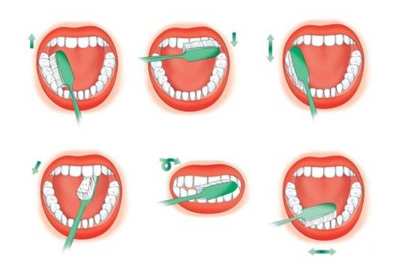
Oral care helps preserve the teeth and prevent diseases of the internal organs. Teeth should be brushed every day, morning and evening, and the mouth rinsed after meals. To prevent dental and oral diseases, you should see a dentist at least twice a year.
Look at the pictures and learn how to brush your teeth properly!
A clean body and clean clothes are impossible without keeping living rooms, the kitchen and utility areas clean. Each family member is advised to have their own bed and their own towels (personal and bath).
All these hygiene measures, necessary every day, become especially important when someone in the family falls ill, since failure to follow hygiene requirements can harm the health and ability to work of the people around the patient, especially children.
8.6 Topic: “Stress Prevention and Building Stress Resilience Skills”
Stress is a universal adaptive response of the human body to a dangerous or uncertain, yet personally significant, situation when there is no adequate pattern of behavior or it cannot be applied.
Manifestations of stress. Objectively, stress manifests itself in the mobilization of the nervous, immune, cardiovascular and muscular systems.
Subjectively, stress is experienced as a state of tension.
Pros and cons of stress. The upside of stress is the release of extra energy to solve a problem.
The downside of stress is that it makes complex activities harder to perform, and the accuracy, speed and creativity of thinking deteriorate.
Stress management. Managing stress involves three tasks:
- Managing how stressful the situation is;
- Managing your mental state;
- Recovering after stress.
- Consequences of stress if you fail to cope with it.
If a person fails to cope with a stressful situation, they may develop psychosomatic diseases.
Introducing participants to the Holmes and Rahe life events scale. American doctors Holmes and Rahe developed a life events scale to determine a person’s level of stress and, accordingly, their risk of psychosomatic diseases. The scale includes not only negative but also positive events, such as a wedding.
Each event on the scale is assigned a certain number of points reflecting how stressful the event is for the human body. The maximum score is 100, which corresponds to the death of a spouse. Among positive events, a wedding is rated highly at 50 points. According to this test, the person being tested for stress marks all the events they have experienced over the previous year, counting from the day of testing. They add up the points; if the total is above 300, the risk of developing psychosomatic diseases is very high.
We offer you the psychological test “Holmes and Rahe Life Events Scale”. By taking this test, you can determine your current level of susceptibility to various kinds of stress. You will also be able to identify your degree of risk of psychosomatic diseases (diseases that arise from psychological causes).
| No. | Life events | Points |
| 1 | Death of a spouse | 100 |
| 2 | Divorce | 73 |
| 3 | Marital separation (without formal divorce), breakup with a partner | 65 |
| 4 | Imprisonment | 63 |
| 5 | Death of a close family member | 36 |
| 6 | Injury or illness | 52 |
| 7 | Marriage, wedding | 50 |
| 8 | Dismissal from work | 47 |
| 9 | Marital reconciliation | 45 |
| 10 | Retirement | 45 |
| 11 | Change in health of family members | 44 |
| 12 | Partner’s pregnancy | 40 |
| 13 | Sexual difficulties | 39 |
| 14 | Gain of a new family member, birth of a child | 39 |
| 15 | Reorganization at work | 39 |
| 16 | Change in financial situation | 39 |
| 17 | Death of a close friend | 37 |
| 18 | Change of profession, change of workplace | 36 |
| 19 | Increase in conflicts with spouse | 35 |
| 20 | Loan or mortgage for a major purchase (e.g. a house, ) | 31 |
| 21 | Loan or mortgage repayment falling due, growing debts | 30 |
| 22 | Change of position, increased responsibilities at work | 26 |
| 23 | Son or daughter leaving home | 29 |
| 24 | Trouble with in-laws | 29 |
| 25 | Outstanding personal achievement, success | 28 |
| 26 | Spouse stops working (or starts working) | 26 |
| 27 | Change in living conditions | 25 |
| 28 | Moving or change of residence | 20 |
| 29 | Loan for smaller purchases (e.g. a car, TVs) | 17 |
| 30 | Change in the number of family members living together, change in the nature and frequency of contact with other family members | 15 |
| 31 | Minor violation of the law (fine for a traffic violation) | 11 |
Key.
| Total score | Level of stress resistance |
| Less than 150 | very high |
| 150-199 | high |
| 200-299 | Borderline |
| 300 or more | Low (vulnerability) |
Ways to manage stress. Methods for changing your mental state. In classic stress management, as mentioned above, changing your mental state is considered one of the ways to manage stress. The methods for changing your state include: verbalization, visualization, meditation (relaxation), external influence, music and light-and-music therapy.
8.7 Topic: “Communication Skills”
Communication is a specific form of interaction between a person and other members of society. In essence, communication is the interaction of two or more people to exchange information: thoughts, feelings and actions. People’s social relationships are realized through communication. Communication is a complex process and a closed loop.
The criteria for communication skills are the ability to exchange information verbally and non-verbally and to assess the personal traits and qualities of the other person; the ability to persuade and argue one’s position; mastery of public speaking, literacy in oral and written speech, public presentation of the results of one’s work, and selection of appropriate forms and methods of presentation.
The ability to develop a strategy, tactics and techniques for interacting with people and to organize their joint activities to achieve certain socially significant goals; the ability to identify with the other person, to understand how one is perceived by one’s communication partner and to treat them with empathy, and readiness to demonstrate competence (i.e. the motivational aspect).
Effectiveness in the communicative side of interaction.
- The communicative side – is the process of sending (transmitting) information. The goal of communication is to influence another person.
- Means of communication. Body, posture, gestures, facial expressions, tone of voice, words.
Principles of successful communication. To become an effective communicator, follow these principles:
- the meaning of communication lies in the response you get;
- be congruent with the main idea in all parts of the communication;
- take responsibility for your part in the closed loop of communication.
Conditions for successful communication.
Trust, confidentiality, engagement.


